
A Bird’s Eye View of Forest Stewardship
It’s six-thirty a.m. on a foggy morning when I meet my coworkers in San Vicente Redwoods. As we don our hard hats, it is still peaceful in the misty forest, where towering redwood trunks disappear upward into the gray. We are here today to do a nesting bird survey, a small but vital piece of the land stewardship we pursue.
Much of San Vicente Redwoods burned in the 2020 CZU Fire, although not evenly. In some places the forest is green and crowded. In other places, blackened trunks rise through new vegetation, and dead trees stand above the living ones.
Our team is working with our partners Peninsula Open Space Trust, Save the Redwoods League, and Land Trust Santa Cruz County to help San Vicente Redwoods remain resilient against future wildfires. Key to this objective is creating shaded fuel breaks along strategically important roads and ridgelines. Here, the treatment extends 200 feet on either side of the road, making a corridor 400 feet wide.
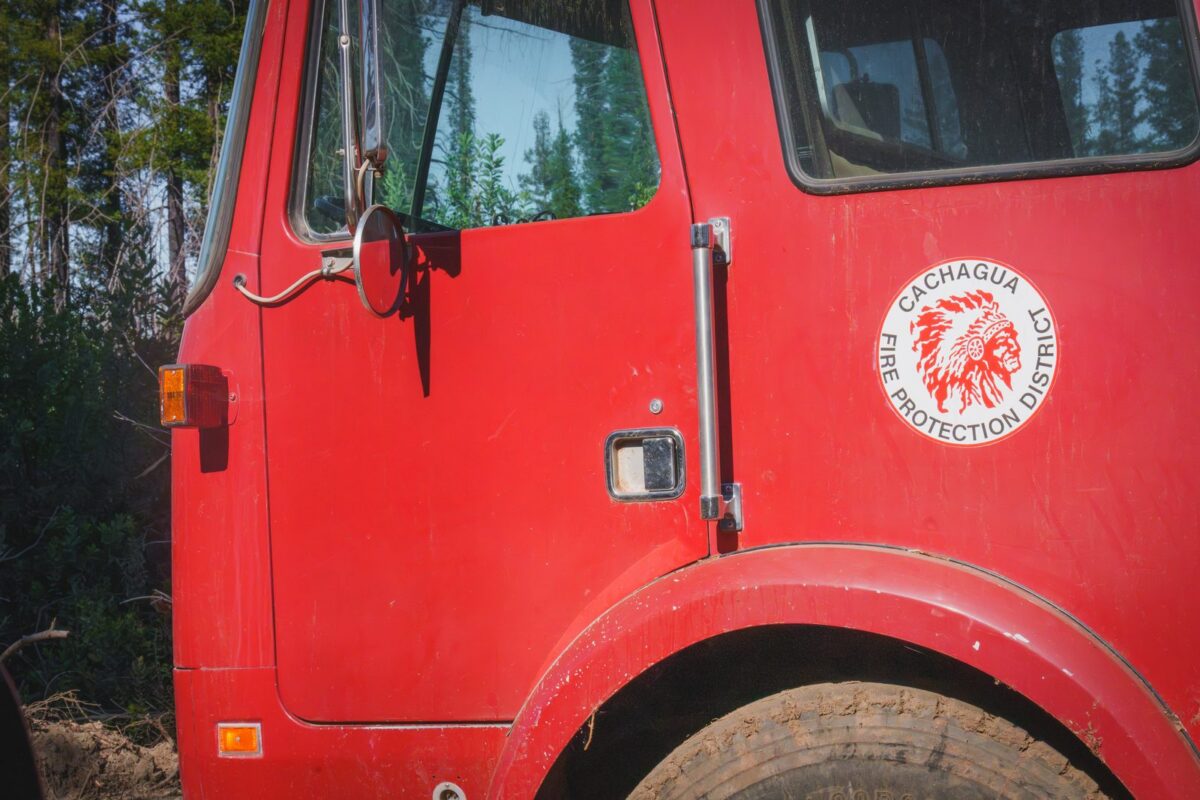
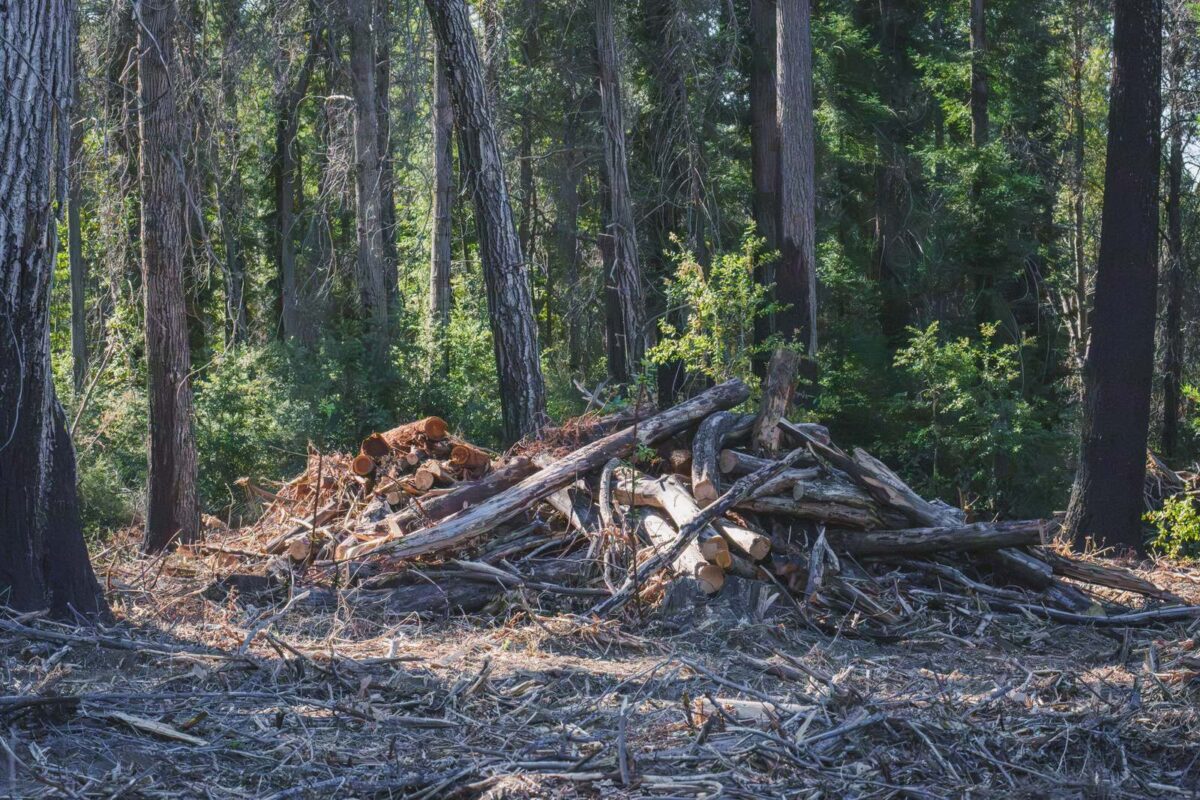
The work includes mastication, a process in which machinery chews through dense brush and small trees, leaving a layer of mulch on the forest floor. The mastication reduces the amount of vegetation available to a wildfire and makes it harder for fire to spread from tree to tree.
We also need to clear alongside the roads. As the crews move through San Vicente Redwoods, the peaceful forest gives way to the growl of engines and the crack of branches. The machinery works its way through tangles of brush and the smell of freshly cut wood hangs in the air. It is noisy, physical work, and it changes the forest in ways that are immediately apparent. For these reasons, before the crews can begin removing vegetation, we must first find out whether any nesting birds are using it as their home.
Following the Chatter
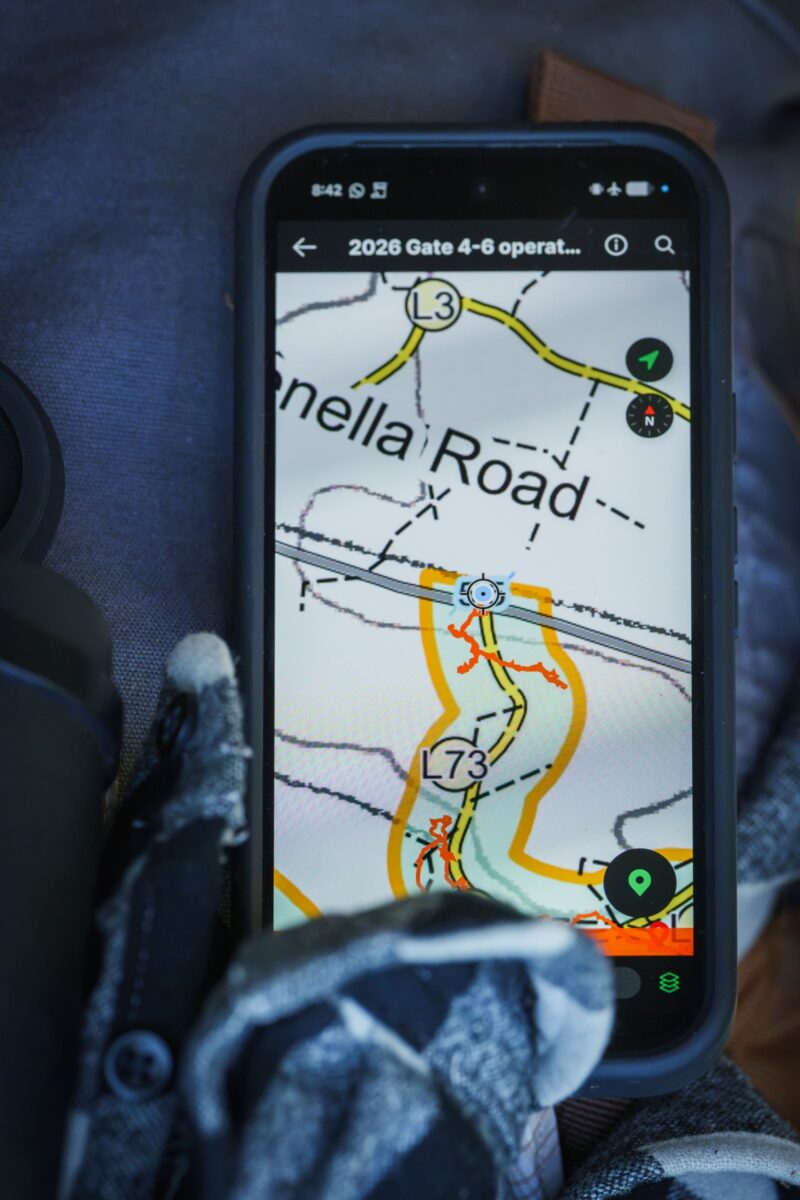
As we take our first step, I start tracking our precise location with my phone. A thin line will follow us as we walk, showing where we have surveyed. We wave at crew members at work and start walking.
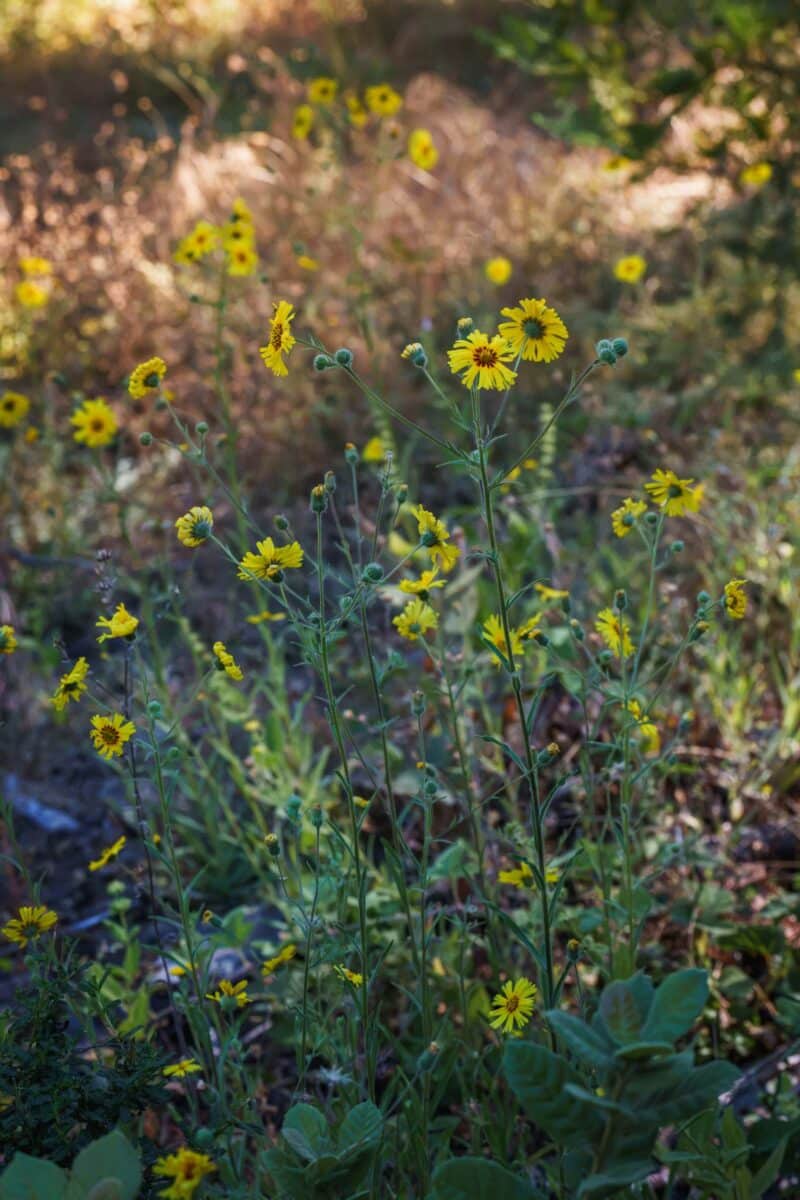
The forest closes around us quickly. There are thickets of Ceanothus, dotted bushes of snowberry, tall stems of coast tarweed, fallen wood, and bare patches of earth along our path. Yellow flowers stand above the grasses, surprisingly bright. Some plants have pale flower spikes and others have new leaves tinted red. A charred trunk has split open to reveal pale wood beneath the black. The fire is six years behind us, but still visible.
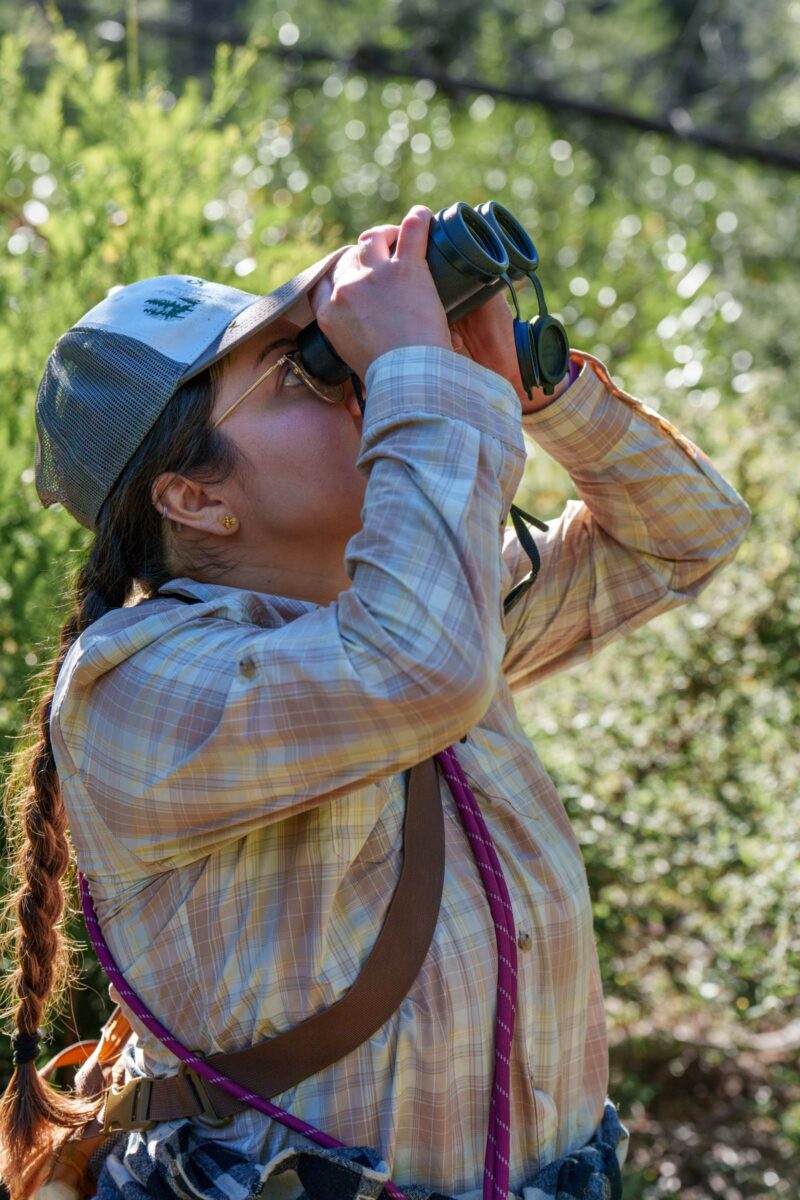
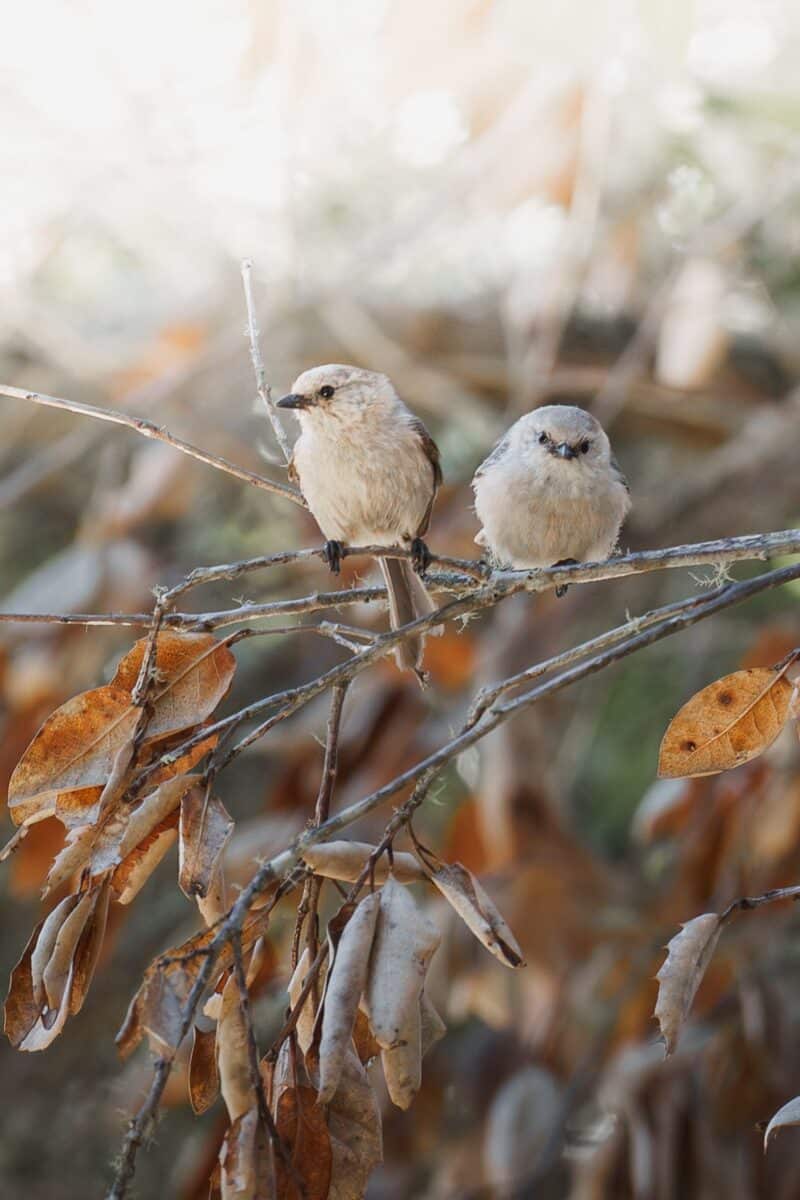
We walk slowly and quietly through the woods, listening for each sound to separate itself from the harmony of the forest. Amid the cacophony, we hear the laughter of a woodpecker, the Chi-ca-go! Chi-ca-go! of a California quail, and the soft twittering of bushtits. We find the bushtits in a tree, and I pull out my binoculars to observe them.
Zooming In On A Nest
When we spot birds, we stop and watch them for several minutes to determine if they are nesting in the tree or merely spending time there. I watch carefully for their behavior. A bird repeatedly returning to the same branch can indicate it is not just taking a break. A bird acting angry, like it wants us to get out, could mean a nest is nearby. But these birds are calmly preening themselves. I look closely for the nest.
A bushtit nest is an intricate hanging sock of plant fibers and lichen, bound together so delicately that spider silk may be part of its construction. The nests have a strange elasticity to them, but in the tree, it dangles from the thin branches and disappears into the tree’s structure as though it had grown there. Finding no bird claiming this nest as home, we continue our route.
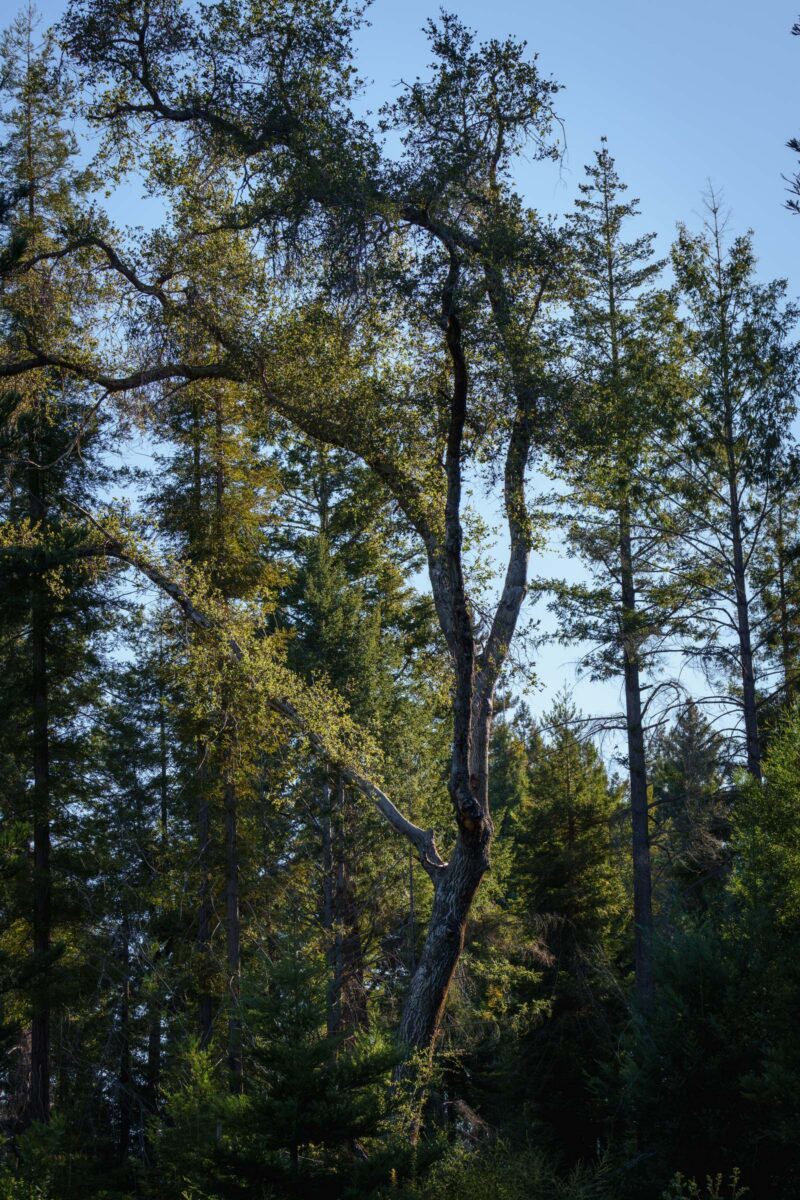

It is now twelve-thirty p.m. Throughout the day, we have found two nests without any bird activity, and I mark their locations on my phone. Neither appears to be occupied, but this is a matter that requires another look. Before vegetation work reaches this part of the property, other staff will return to see whether the birds have taken up residence. If they have, the crews may need to wait before working nearby.
The surveys continue through the summer, moving ahead of the crews as they make their way across San Vicente Redwoods. The information we gather is modest, but it has a practical importance. It tells us where birds are nesting and helps us arrange the work so that the forest can be made more resilient without needlessly disturbing the creatures that live in it. Looking for nests may seem small and simple, but it's one of the many tiny pieces that add up to the big picture of fire resilience, protecting redwoods (and their residents) for years to come.
More to Explore:
As we take our first step, I start tracking our precise location with my phone. A thin line will follow us as we walk, showing where we have surveyed. We wave at crew members at work and start walking.
- Find an upcoming volunteer activity to help care for redwood forests while keeping an ear out for feathered friends.
- Your next hike or afternoon in the garden can also be an opportunity to get to know the birds around you. Learn how to bring birding into your time outdoors.
- When the sun goes down, another group of flying residents takes the air. Discover the bats that call redwood forests home.