Photo by Beatrix Jiménez-Helsley.
On the day of a prescribed fire, trained practitioners move carefully across the landscape with handheld torches. They introduce fire close to the ground, and small flames lick their way through leaves, branches, and vegetation. Smoke rises beneath a canopy that largely remains green overhead.
This is the part most people see. But the work did not begin with the first flames.
It began with people studying the forest and asking a more important question. What does this place need?
The answer shapes everything that follows. Land managers must set clear ecological goals, prepare the site, protect sensitive
resources, coordinate with agencies and partners, and wait for the right combination of weather, fuel conditions, staffing, and air quality.
After the fire dies out and the visible smoke clears, teams return over months and years to see how the forest responded and what care may be needed next.
Prescribed fire is not a single event. It is part of a much longer commitment to the forest.
FIRE AND REDWOODS
Why use prescribed fire in a redwood forest?
Coast redwood forests are often described through water: winter rain, summer fog, shaded creeks, and the moisture held beneath towering canopies. But fire has also shaped these landscapes for centuries.
Indigenous people have long used cultural fire to care for land, encourage important plants to grow, support wildlife, and sustain relationships among people, place, and community. Cultural burning is rooted in Indigenous knowledge, sovereignty, and living practice. It is distinct from prescribed fire, which is commonly planned and carried out by public agencies, fire professionals, and land managers today.
Colonization disrupted Indigenous stewardship. For more than a century public land agencies widely suppressed fire, which further changed many forests. Clear cut logging also altered forest composition, creating dense stands of young trees and a wild tangle of understory vegetation.
In some places, these conditions combine to make wildfire, when it happens, significantly more destructive. Dense vegetation may carry flames upward from the forest floor and into the canopy. A heavy concentration of surface fuels can influence how hot a fire burns and how quickly it moves.
Prescribed fire is one tool land managers may use to address these conditions. Depending on the place and the purpose, a carefully planned burn may reduce accumulated vegetation, encourage certain native plants to emerge, improve habitat, and help a forest better withstand future wildfire.
KEY IDEA
The important distinction is not simply between fire and no fire. Different kinds of fire are needed under different conditions and for different purposes.
The objective of prescribed fire is to use the right fire, in the right place, under the right conditions, for a clear ecological purpose.
A PLAN ROOTED IN PLACE
Every burn starts with a purpose.
There is no standard prescribed burn that can be applied to every forest.
Land managers begin by studying the history and current condition of a site. They may consider forest density, past logging and fire, the amount and arrangement of vegetation, streams and watersheds, wildlife habitat, cultural resources, access, nearby communities, and the presence of old growth or an emerging old growth forest.
They then define what they want the burn to accomplish.
At one site, the priority may be reducing vegetation on the forest floor, so a future wildfire is less likely to spread quickly or reach the canopy. At another site, the goal may be encouraging particular native plants to grow, maintaining open habitat, or restoring an ecological process that has been absent for decades.
Prescribed fire may also be one part of a larger restoration plan. Complementary projects can include removing invasive plants, thinning dense stands of young trees, establishing shaded fuel breaks, restoring watersheds, or protecting old growth trees or younger trees with the potential to become the old growth of the future.
The goals for the site determine where fire may be used, how the area is prepared, what conditions are acceptable, and what teams will monitor afterward.
MONTHS BEFORE IGNITION
What happens before a prescribed fire?
Long before ignition, specialists work through several connected stages.
01
Read the Landscape
Teams identify a burn unit, the defined area where fire may be introduced or managed. Roads, trails, streams, ridgelines, and previously treated areas may provide useful boundaries. Teams also study slope, wind, access, water, and where smoke may travel.
Planning extends beyond the burn unit. Nearby homes, roads, neighboring lands, public access points, utilities, and communities that could experience smoke all affect the plan.
02
Protect sensitive places and resources
Depending on the site, specialists may survey sensitive plants and wildlife, assess streams and watersheds, identify important habitat features, and review cultural resources.
Some areas may be excluded from burning. Others may require preparation around trees, habitat features, structures, or cultural sites. Timing and ignition methods may also change to protect wildlife and sensitive areas.
03
Prepare the forest
In some forests, years of fire exclusion and the effects of past clear cut logging mean that fire cannot safely return without preparation.
Crews may remove selected vegetation, thin smaller trees, strengthen control lines, improve shaded fuel breaks, or clear vegetation near roads and other boundaries. The goal is not to make the forest bare, but to influence how fire moves while retaining the trees, habitat, and forest structure the project is designed to protect.
04
Write the prescription
The word "prescribed" is literal. Qualified fire professionals develop a plan that identifies desired fire behavior and acceptable ranges for temperatures, humidity, wind, and moisture.
The plan also addresses staffing, equipment, communication, ignition, smoke, safety, contingencies, permits, approvals, and public notifications.
05
Build the partnerships
Projects may involve landowners, fire practitioners, public agencies, air quality regulators, local fire districts, conservation organizations, researchers, contractors, neighboring landowners, and Tribal partners.
These relationships cannot be created on burn day. They grow through planning, training, communication, and repeated work together.
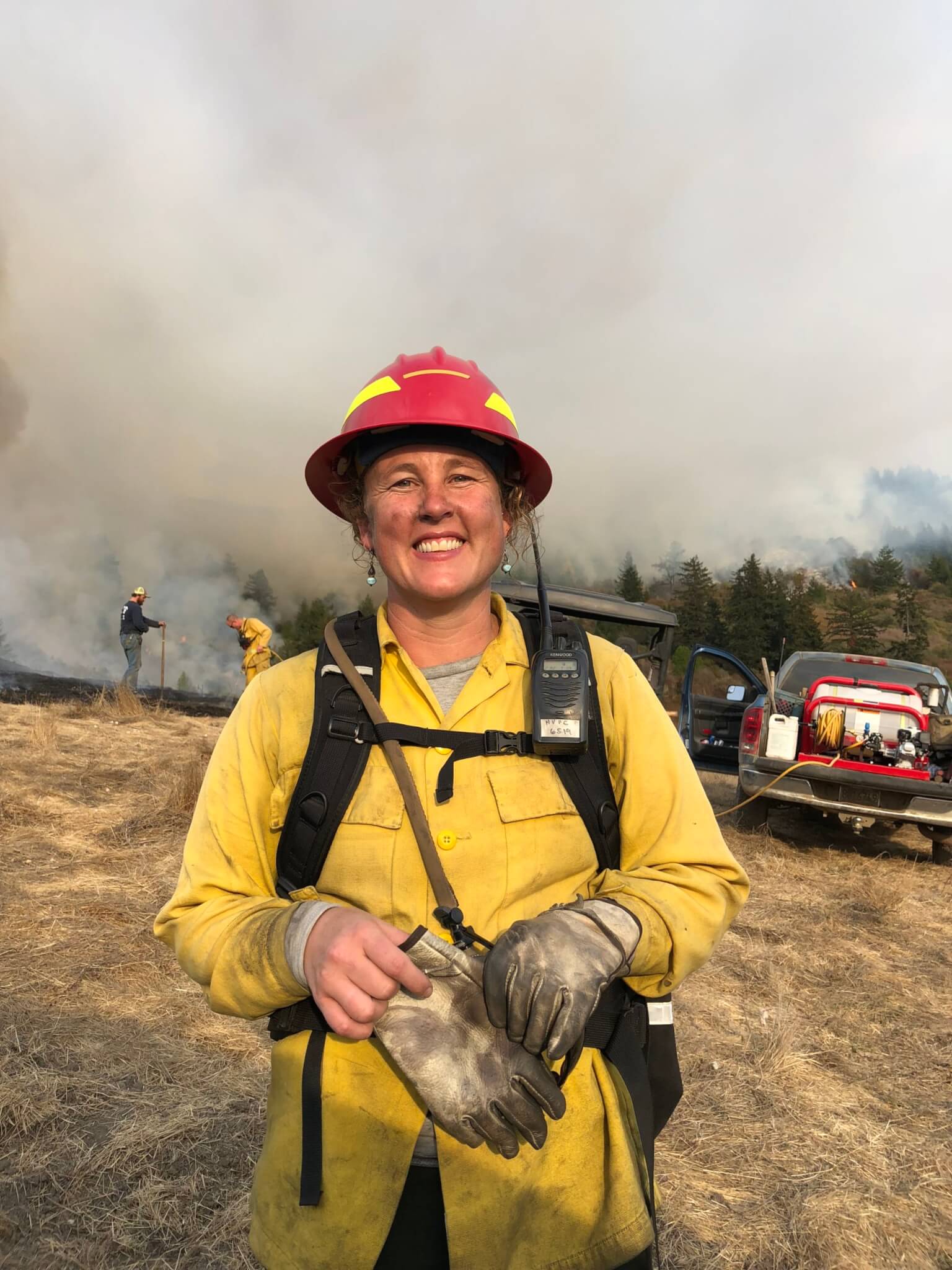
Careful preparation brings trained people,
clear roles, and the right conditions together.
Learn more about prescribed fire with policy expert
Lenya Quinn-Davidson Under the Redwoods(opens in new tab). Photo by Thomas Stratton.
WAITING IS PART OF THE WORK
Why can a prepared burn still be postponed?
A project can be fully prepared and still not proceed.
Vegetation must be dry enough to carry fire, but not so dry that the fire could burn more intensely than intended. Wind must be predictable and remain within the limits of the plan. Temperature and humidity affect fire behavior. Smoke must be expected to disperse in a way that meets air quality requirements and limits effects on nearby communities.
The necessary people, equipment, permits, and approvals must all be available at the same time. That combination may occur for only a short period of time. If one essential condition falls outside the prescription, the burn is postponed.
This can be frustrating after months of preparation, but waiting is not a failure. It is a central part of using fire responsibly.
A burn window is not a deadline. The project moves forward only when the forest, the weather, and the team are ready.
CAREFUL ATTENTION
What happens on burn day?
When the plan, approvals, staffing, and conditions align, the team completes another series of checks.
Crews review assignments, communication, safety procedures, escape routes, and contingency plans. Equipment and water are placed where they may be needed. Weather and fuel conditions are measured at the site.
A small test fire may be used to confirm that actual fire and smoke behavior match the plan. If they do not, the burn does not proceed.
If conditions remain acceptable, trained practitioners introduce fire in deliberate patterns. Ignition may begin near secure boundaries and build from areas that have already burned. The sequence and spacing help shape the fire's direction and intensity.
Throughout the operation, crews watch the wind, smoke, vegetation, and fire behavior. They adjust their work as conditions change and remain within the limits established by the plan.
In a photograph, the flames may appear to be the central event. On the ground, the defining feature of burn day is careful attention.
Photo by Orenda Randuch.
LEARNING OVER TIME
What happens after the smoke clears?
The work does not end when ignition stops. Crews continue to patrol the area, secure its edges, and monitor heat or smoke that may require attention. Later, land managers evaluate how the forest responded.
Monitoring helps practitioners learn from each project. It can improve future planning and how treatments perform in different forests and under different conditions. Some effects may be visible quickly. Others can take seasons or years to understand.
Teams may ask:
- Did the forest structure change in the intended way?
- Is additional restoration or maintenance needed?
- What should be carried forward into the next burn plan?
- Did the fire reduce the vegetation it was intended to address?
- Did the fire remain within the planned range of effects?
- How did native plants and habitat respond?
IN THE SANTA CRUZ MOUNTAINS
How is Sempervirens putting this approach into practice?
This fall, Sempervirens Fund and our partners are beginning old growth restoration work at former Huckleberry and Watashi campgrounds.
The work is intended to reduce dead and dying fuels and thin shrub vegetation that grew after the fire around surviving old-growth redwoods. This will improve forest resilience and reduce the risk that future wildfires will burn at high severity. It is part of a longer effort to protect surviving old-growth trees and help younger forests develop more of the complexity found in old growth ecosystems.
Sempervirens is also partnering on preparations for three prescribed burns at San Vicente Redwoods. Each project has its own ecological purpose, preparation needs, partners, and possible burn window.
The burns will move forward only when the necessary plans, permissions, personnel, and environmental conditions are in place. If those conditions do not align this winter, the team will continue preparing for a later opportunity.
These projects reflect a broader understanding of redwood conservation. Protecting land is essential, but permanent protection is not always the end of the work. Forests altered by logging, disrupted stewardship, wildfire, and a changing climate may need sustained and adaptive care.
Photo by Orenda Randuch.
WHY STEADY SUPPORT MATTERS
Help care for redwood forests all year
The visible portion of a prescribed fire may last only a day. The commitment behind it continues throughout the year.
Forest Sustainers provide dependable monthly support for this long view. Their gifts help Sempervirens plan ahead, care for protected lands, and respond when the forest and the opportunity align.