
Advancing Conservation from the Capitol to the Coastline
 SEMPERVOICES:
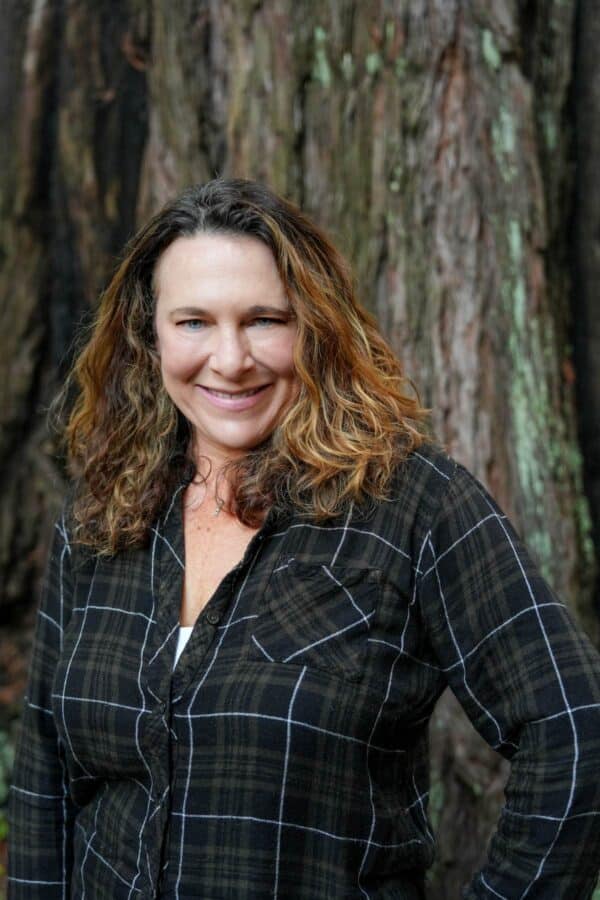
RACHEL DANN
DIRECTOR OF GOVERNMENT RELATIONS
Interview: Building Systems that Makes Conservation Possible
Rachel Dann, Director of Government Relations at Sempervirens Fund, works at the intersection of conservation and government. She helps translate on-the-ground priorities into the legislation, funding, and partnerships that make long term protection possible, and focuses on building the conditions that allow conservation to endure over time. Her work reflects a broader approach that looks beyond individual projects to the systems that make lasting protection possible when policy, partnerships, and funding align.
In this conversation, she reflects on the years of groundwork behind recent legislative wins, the push to streamline the transfer of protected lands to State Parks, the role of coalition building in uncertain moments, and the systems -level approach now shaping the future of redwood conservation.
Your role is focused on policy work in Sacramento. How does that influence the future of forest protection?
While a great deal of conservation and restoration happens in forests, creeks, and grasslands, whether that work lasts is often determined far from the landscape itself. In Sacramento, policy shapes the conditions that make conservation possible: how land moves into permanent protection, how funding reaches projects, and whether agencies have the tools to act in time.
What we saw in 2025 was the result of years of groundwork building relationships, credibility, and a track record people trust. When we worked on AB 679 and SB 630—bills to cut the green tape on land transfers to State Parks, supported other key efforts, and helped move Proposition 4 forward, it was because we’d been showing up consistently and understanding how these systems actually function. Advocacy can feel removed from the land, but in reality, it’s one of the ways long-term protection is made durable.
How have you seen Sempervirens’ approach shift over the last decade, from saving parcels to stabilizing systems?
The work is still about protecting land, of course, but it is less about saving one parcel at a time in isolation and more about stabilizing the larger systems those parcels belong to. That means thinking more about landscape connectivity,watershed function, wildfire resilience, biodiversity, and long-term stewardship capacity.
This also means looking at new models for protection and long-term stewardship of the landscape that require us to bring in new partners. Climate change and the urgency to restore old-growth all require us to think at a bigger scale. We need to look beyond whether a property is worth protecting and ask how protection helps hold together a larger ecological system, and whether there is a durable path for that land to be stewarded well over time.
One of the biggest recent policy efforts was to streamline land transfers to State Parks. What was the problem you were trying to solve?
At the start of 2024, I worked closely with Assemblymember Gail Pellerin on legislation sponsored by Sempervirens Fund to streamline land transfers to State Parks. Sponsoring that bill gave Sempervirens and our supporters a real voice in shaping the pathway for conservation.
The goal was to reimagine a needlessly cumbersome process for transferring recently acquired land to State Parks. Even when everyone agrees a property should be protected and ultimately stewarded as parkland, the transfer process can be slow and complicated. That can delay long-term protection, public access, and management when time really matters.
How was the bill received?
Our bill earned broad support from many partners in 2024, but it was vetoed by the Governor at the one-yard line. But we did not let that setback stop us. I worked with Assemblymember Pellerin, to reintroduce the legislation in 2025. On October 13, 2025, the Governor signed AB 679, and its companion bill, SB 630 authored by Senator Ben Allen. Together, those bills cut through that green tape and expedite the process for State Parks to expand and keep conserved lands protected long term.
That was a major win, not just for Sempervirens and redwoods, but for conservation in California more broadly. It showed what is possible when lawmakers, partners, and advocates stay committed.
What is the impact of a bill like this for conservation?
I see its impact as working in tandem with existing efforts and funding. So, in 2025 Proposition 4 funding, which California voters passed overwhelmingly in 2024, was built into the state budget. That created real public resources for agencies to carry out conservation work.
Together, these policy changes and Prop 4 funding established something we have long needed: a land transfer system with both the authority and the means to act at the pace the land—and threats like climate change—demand.
 Beyond legislation, how do you see advocacy fitting into Sempervirens’ work?
Policy is constantly evolving, so our role is to stay actively engaged and to be ahead of the curve: monitoring legislation, interpreting what it means, and mobilizing supporters when it matters most. Public demand for climate action and conservation advocacy has risen, and that engagement makes a real difference.
In 2025 alone, our community drove more than 22,000 digital advocacy actions in support of ambitious efforts like protecting 30 percent of America’s lands and waters by 2030 and rejecting offshore oil leases along California’s coast. That level of participation shows that people want to be part of shaping the future of these landscapes.
If policy is often a long-term process, why is advocacy so important right now?
In uncertain times, we are concentrating the collective power of building coalitions and wielding policy to protect against volatility. Building coalitions has been part of Sempervirens from the beginning. Grassroots neighbors once fought against the loss of old-growth redwoods and helped establish what would become California’s oldest state park.
That same spirit continues today. Alongside our board, staff, and supporters, I see my role as building trust with legislators, local government, and conservation and industry partners to help turn public support into lasting forest protection.
What does a successful outcome of this work look like on the ground?
One powerful example is the Cotoni-Coast Dairies unit of the California Coastal National Monument, which opened to the public in summer 2025 with nearly nine miles of hiking and biking trails. I partnered with the Bureau of Land Management to host the opening ceremony, and it was incredibly meaningful to witness the result of decades of work coming into public view.
Now, the property belongs to a distinct class of federally protected landscapes managed with conservation as the priority. That makes restoration work possible at a much deeper level, from improving habitat quality to coordinating wildfire risk reduction so the land can thrive for future generations. For me, Cotoni-Coast Dairies is a tangible result of persistent effort over many years. It is also a marker of what becomes possible when policy, partnerships, and funding align.
As you look ahead, what feels newly possible because of the progress made in 2025?
My sense of what feels possible now is less about certainty and more about readiness. The work we did in 2025 has left us better prepared to act on opportunities as they arise and to keep building toward lasting protection.
That momentum does not come from our organization or public funding alone. It also depends on private support from donors and advocates who are willing to take action when it matters most. Their support gives us the flexibility to keep projects moving and helps close the gap where public dollars fall short. Because of that, I feel optimistic about the direction we are headed.
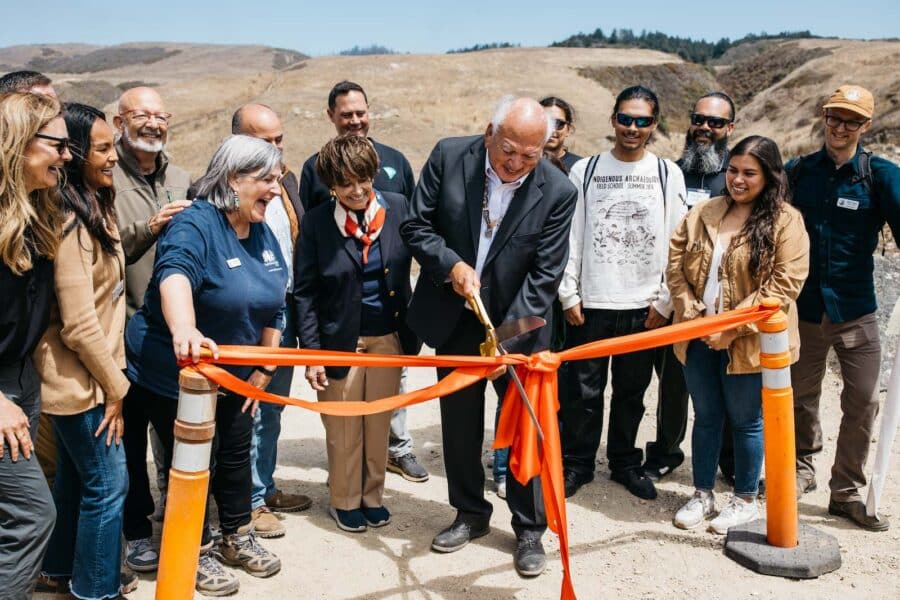
Community members celebrate the opening of Cotoni-Coast Dairies with a ribbon-cutting ceremony
More to Explore
- Add your voice to help protect redwoods, climate, water, wildlife, and public lands through Sempervirens’ Action Center.
- Dive deeper into the policy win that helps protected lands move into State Parks faster.
- Explore Cotoni-Coast Dairies, where decades of partnership opened new public trails on protected coastal land.