
Restoring Old-Growth Forests from High-Intensity Fire
 SEMPERVOICES:
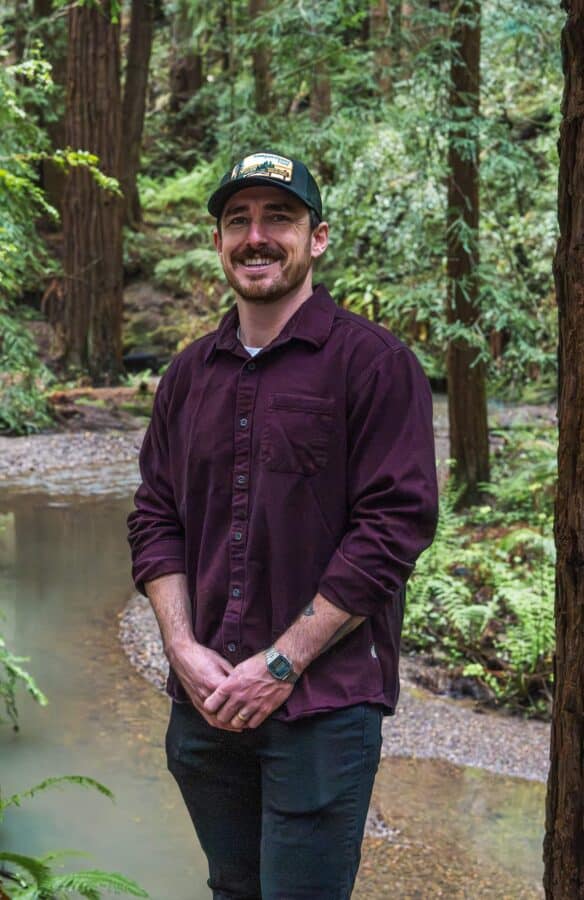
DAVID COWMAN
DIRECTOR OF LAND STEWARDSHIP
Interview: On Stewardship, Fire, and the Future of Redwood Forest
David Cowman, Sempervirens’ Director of Land Stewardship, helps guide Sempervirens’ approach to caring for protected redwood forests with the long– term in mind. His role brings together restoration forestry, wildfire resilience, watershed recovery, and partnership-based stewardship across some of the Santa Cruz Mountains’ most important landscapes.
In this conversation, David discusses the shift from restoration to continuous stewardship, the lessons emerging five years after the CZU Fire, the decade of groundwork behind San Vicente Redwoods, and the collaborative effort now underway to help protect old-growth redwoods at Big Basin.
How has our understanding of old-growth redwood forests changed since the high-intensity CZU fire?
Before the CZU Fire, there were no real case studies of high-intensity wildfire moving through old-growth redwood forest at this scale. In the immediate aftermath, the focus was on the trees’ survival, and the first signs seemed encouraging: redwoods were resprouting, and the forest appeared to be recovering.
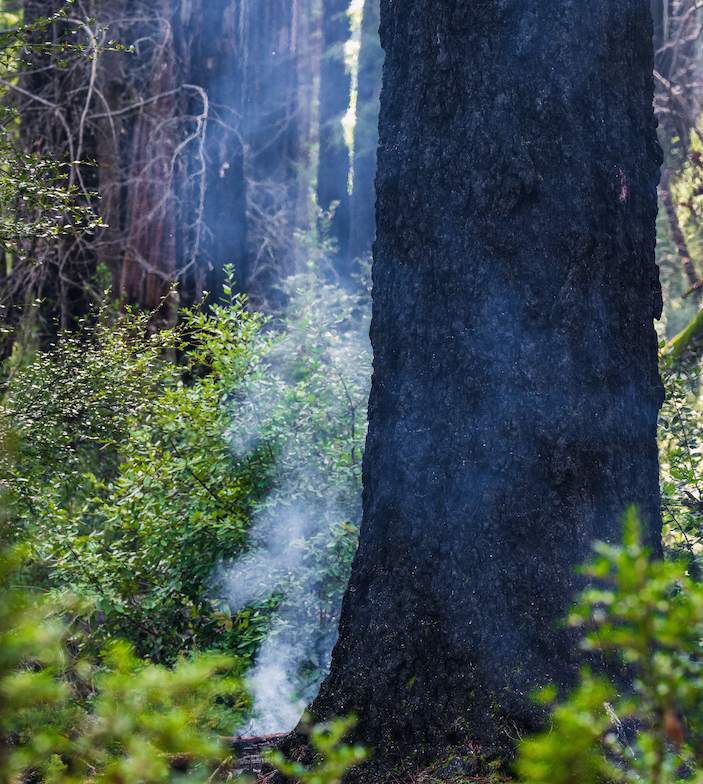
Five years later, we know the story is more complicated. The landscape is still changing. For example, Ceanothus thyrsiflorus, or blueblossom, has appeared in places where it had not been visible before. Fire activated a dormant seed bank that had been waiting in the soil, showing us that old-growth forests hold a deeper ecological memory than we once understood. We’re also seeing how fire, drought, and a warming climate can combine to push old-growth trees into decline years after the initial burn. Together, those lessons have made clear that a more active approach to stewardship will be necessary to help these forests recover.
When you see fire-following plants reappear after a burn—species like blueblossom, for example—what do they tell you about what this landscape may once have looked like?
Blueblossoms reappearing after a fire can offer a faint portal into the landscape. They remind us that disturbance has long been part of these systems. These large, ancient structures are only one part of a broader ecological whole that includes soils, seed banks, understory communities, and recovery processes. Seen in that context, old-growth forests were not always as dense and closed as many people imagine them today.
How does that shift the way you think about the role of fire in these forests?
Well, we know from ethnographic studies, pollen records, and fire-scar evidence that Indigenous peoples stewarded this region for thousands of years, and that fire was integral to that stewardship. In the Santa Cruz Mountains, some areas burned on intervals of roughly five to 25 years, far more frequently than lightning alone can explain. Historical records and tribal oral histories make clear that people intentionally burned across the landscape, and Indigenous communities continue to carry that knowledge forward through stewardship today. That frequent fire helped create a much more open, resilient mosaic of redwood forest, oak woodland, and coastal prairie.
Places like Cotoni-Coast Dairies help us imagine that world a little more clearly. The landscape we are working in now, where trees are often crowded together and forests carry much heavier fuel loads, is, in part, a result of interrupting that long history of human stewardship.
So, Sempervirens is trying to relearn that active stewardship in its goals for restoring these forests moving forward?
Yes, we are not trying to freeze forests in place or assume they will be fine if we simply protect them and walk away. We are trying to move landscapes toward conditions that are healthier and more resilient in a warmer, drier, more fire-prone climate. There’s a groundswell toward thinking about stewardship as a long-term relationship. You don’t go in, do a project, and leave. As long as you’re responsible for managing a landscape, you have to keep managing it.
Where do you see that most clearly in Sempervirens’ work right now?
This larger shift to ongoing stewardship is most visibly clear at San Vicente Redwoods. For more than a decade, Sempervirens and our partners have been doing the often– unglamorous work of restoring the watershed and improving forest conditions so the property could become healthier over time. After CZU, that work changed in both urgency and scope. While many organizations recognized the need for post-fire recovery, San Vicente was one place where we had the capacity to keep moving on the ground.
The fire made clear that stewardship now has to account for compounding stressors—high-intensity fire, drought, and a warming climate—not just any one disturbance in isolation. So now the work that focused on recovery of this landscape included how to actively steward a forest under much greater pressure than in the past.
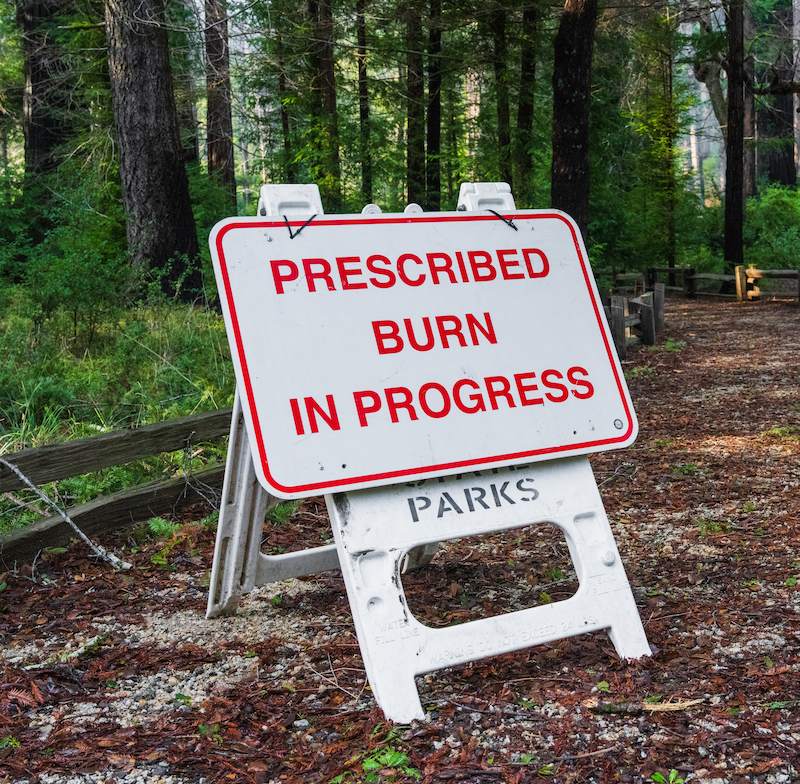
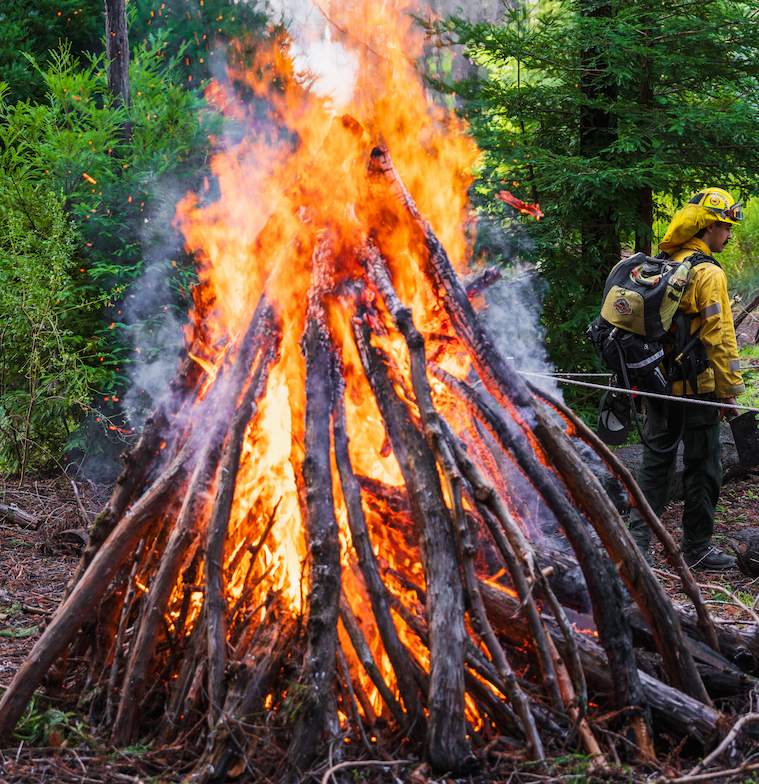
That is still the direction now. We are continuing post-fire cleanup, establishing shaded fuel breaks, and preparing the property for more prescribed fire. The ultimate goal is not to depend on heavy equipment or repeated emergency response forever. It is to restore forest conditions resilient enough to be managed more regularly with prescribed fire, the way Indigenous peoples stewarded these landscapes for generations.
One of the most visible projects at San Vicente was the large woody debris work at Mill Creek. On the surface, that can look simple: placing trees in a creek. What does a project like that actually represent?
The visible moment, guiding whole redwood trees into a bend of the creek so they could slow water, carve deeper pools, and create sheltered habitat for fish, only happens because of years of groundwork. A decade of restoring the watershed has included building step pools in Upper Jim Creek, removing invasive plants that were choking out the canopy, improving fish passage, reducing erosion from legacy roads, rebuilding stream function, and maintaining culverts and drainage systems ahead of storms.
We also depend on our partners to complete this work. This project included collaboration with the Bureau of Land Management, Peninsula Open Space Trust, local consulting biologists, and the Santa Cruz County Resource Conservation District, who managed the project.
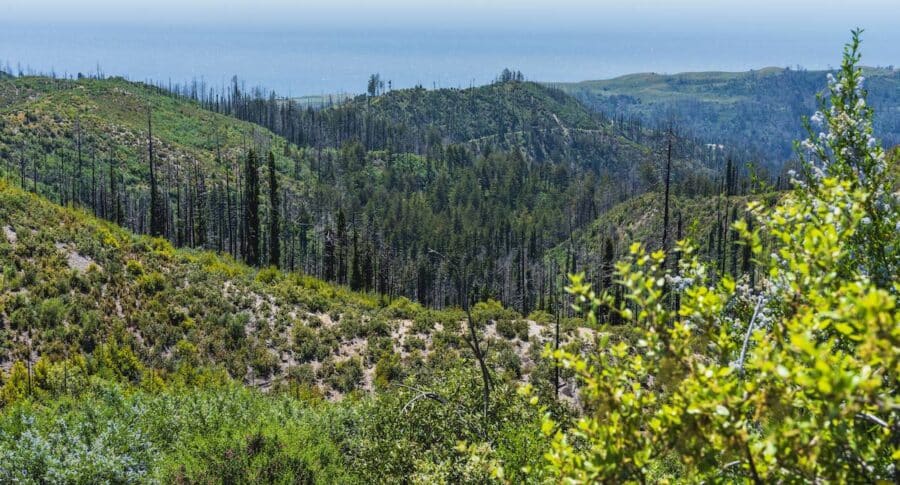
San Vicente Redwoods, where post-fire recovery is reshaping the landscape
What role did that kind of long-term stewardship play in opening the door to new partnerships and projects after the CZU Fire?
Immediately after the fire, Sempervirens stepped in to help California State Parks think through what rebuilding and recovery at Big Basin could look like. That relationship mattered. State Parks was reimagining the future of the park, and forest management emerged as one of the big next steps.
The old-growth project we are now preparing for grew out of that work and that trust. We helped carry forward the partnership, and in 2025 that shared commitment resulted in a major milestone of securing a $3 million grant to begin addressing wildfire resilience in old-growth redwood stands at Big Basin.
That is significant because projects that directly address wildfire resilience in an old-growth redwood stand of this scale are still rare in the Santa Cruz Mountains. It also sets a broader precedent in California, because there simply have not been many efforts like it.
You described 2025 as a year of taking risks. What did you mean by that?
The Big Basin old-growth restoration project requires a lot of people to trust one another. It is the first large restoration effort Sempervirens will manage on land we do not own. State Parks had to trust us. The Coastal Conservancy, as grantor, had to trust that we could deliver. And we had to trust the strength of the partnership and the process enough to step into something new.
That is what made 2025 feel important. We were not only doing work on the ground. As an organization, we were also stepping up as a trusted steward beyond the boundaries of our own properties.
What gives you cautious optimism as you look toward 2026 and beyond?
What gives me optimism is the shift in mindset. There is a growing recognition that stewardship is not optional and it is not temporary. It is an ongoing, intimate relationship with a landscape over time.
At San Vicente, that means continuing the hard work of post-fire recovery and preparing the property for a future centered more on prescribed fire. At Big Basin, it means taking what we have learned over the last five years and applying it in one of the most visible old-growth forests in California.
And across all of it, what gives me confidence is that we are not doing this alone. We are building on years of work, strong partnerships, and the support of a community that has made it possible for Sempervirens to keep showing up.
More to Explore
- Learn how Sempervirens is helping restore forests faster for future generations in Growing Old-Growth.
- Visit Big Basin Redwoods State Park and explore one of California’s most iconic old-growth redwood landscapes
- Discover how stewardship connects forests, streams, and wildlife recovery from creek to sea