
Growing Old-Growth
photo by Orenda Randuch
The Benefits of Old-Growth
Seeing an ancient coast redwood in person is awesome. Some reach more than 300 feet tall—taller than the Statue of Liberty—and every inch of that height is working. Their trunks and canopies create habitat, shade streams and forest floors, store carbon, and help support the living systems around them.
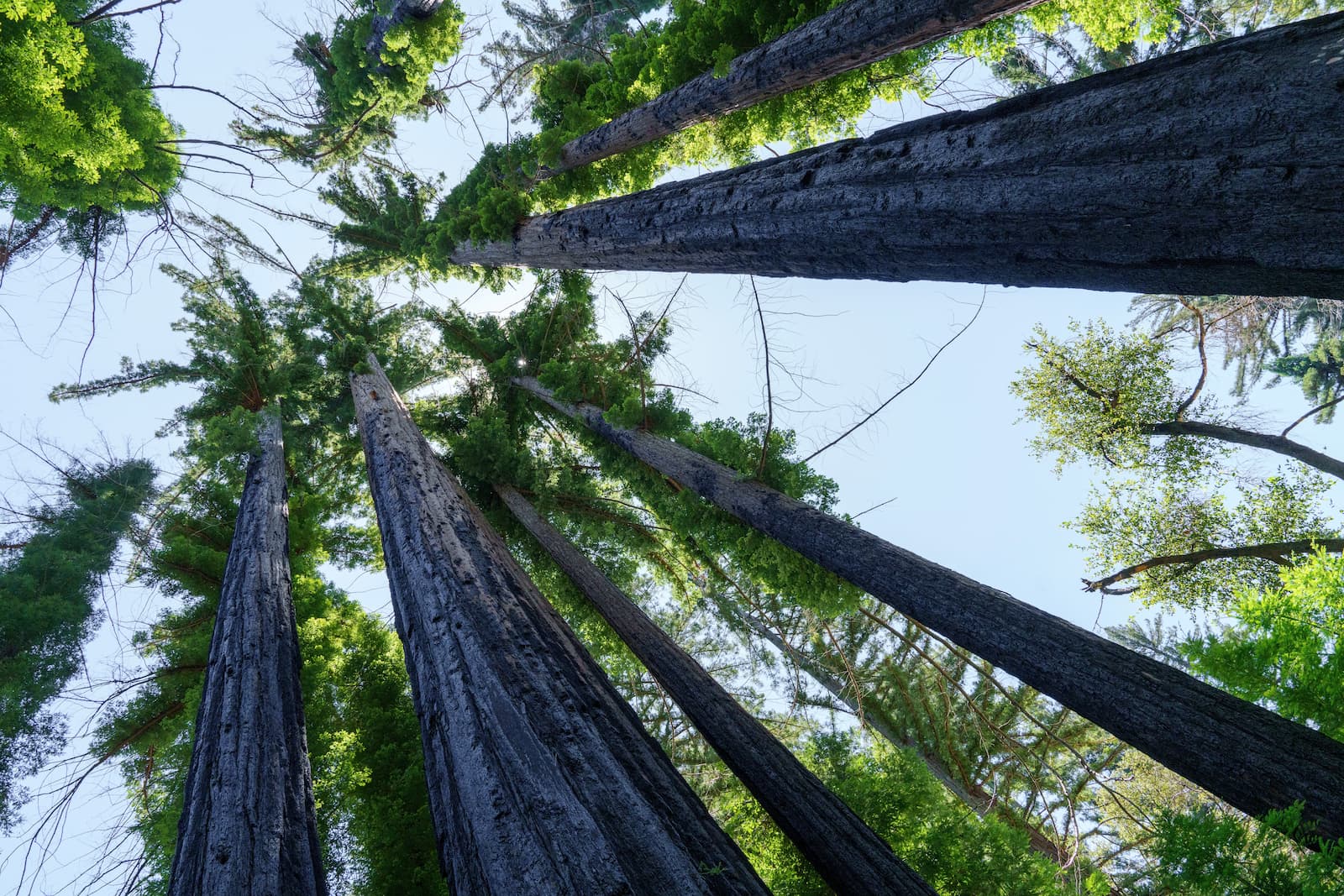
photo by Orenda Randuch
How Old is Old-Growth?
As redwoods age, they often grow in ways that better protect themselves and support the forest. For example, their thick, armor-like bark can grow to be a foot thick–helping to protect them from fire, pests, and rot. Old-growth canopies are higher and harder for fire to reach. Their well-established root systems spread 100-feet wide and interconnect with fungi and other trees throughout the forest to share nutrients and information. Old-growth redwoods are able to help support the forest as a whole, and with their ancient lifespans they are able to live for millennia.
Old-growth redwoods are crucial for forest health, climate resilience, and species survival. Not every ancient tree announces its age in the same way, but over time, redwoods can develop the structure, strength, and complexity that help the whole forest thrive.
The Changing Forest
The redwood forests of the Santa Cruz Mountains have endured more than a century of pressure as forests were clear-cut, fragmented, and altered by fire suppression across landscapes that had long evolved with fire. Today, climate change is bringing hotter temperatures, longer dry periods, and more extreme fire conditions.
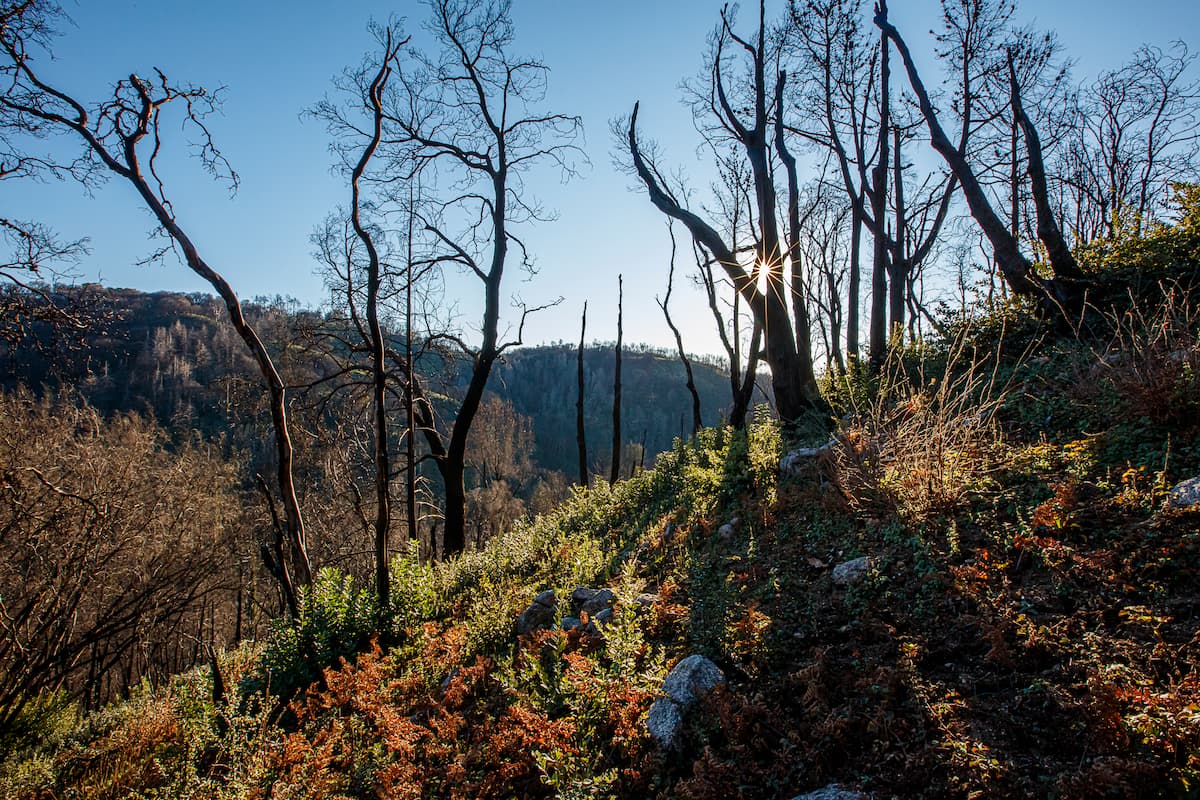
photo by Ian Bornath
Many redwood forests in the Santa Cruz Mountains are still relatively young by redwood standards. These second-growth forests already provide vital habitat, storing carbon, protecting water, sheltering wildlife, and reconnecting landscapes. But many are still recovering in landscapes shaped by extraction, development, and fire. Trees that grew back at the same time often stand close together, competing for sunlight, water, and nutrients.
In older, more complex redwood stands, trees of different ages and sizes create space at every level. Large redwoods rise into the canopy, while openings let sunlight reach the forest floor. Fallen logs return nutrients to the soil and streams, and tall trees shade waterways, keeping them cooler for coho salmon and trout. While recovering forests can regain these characteristics over time, the increasingly extreme and unpredictable effects of climate change are accelerating the need to help redwoods grow healthier and more resilient now.
Restoration Forestry
Fortunately, Sempervirens Fund has decades of experience resetting redwood forest systems from past damage through a forest management approach called restoration forestry. Active restoration forestry techniques can help redwood forests recuperate more quickly and restore healthy forest conditions, allowing them to regain old-growth characteristics in decades rather than centuries. As climate change brings hotter, drier, and more fire-prone conditions, accelerating that recovery can help today’s forests better support wildlife, protect water, store carbon, and endure the pressures ahead.
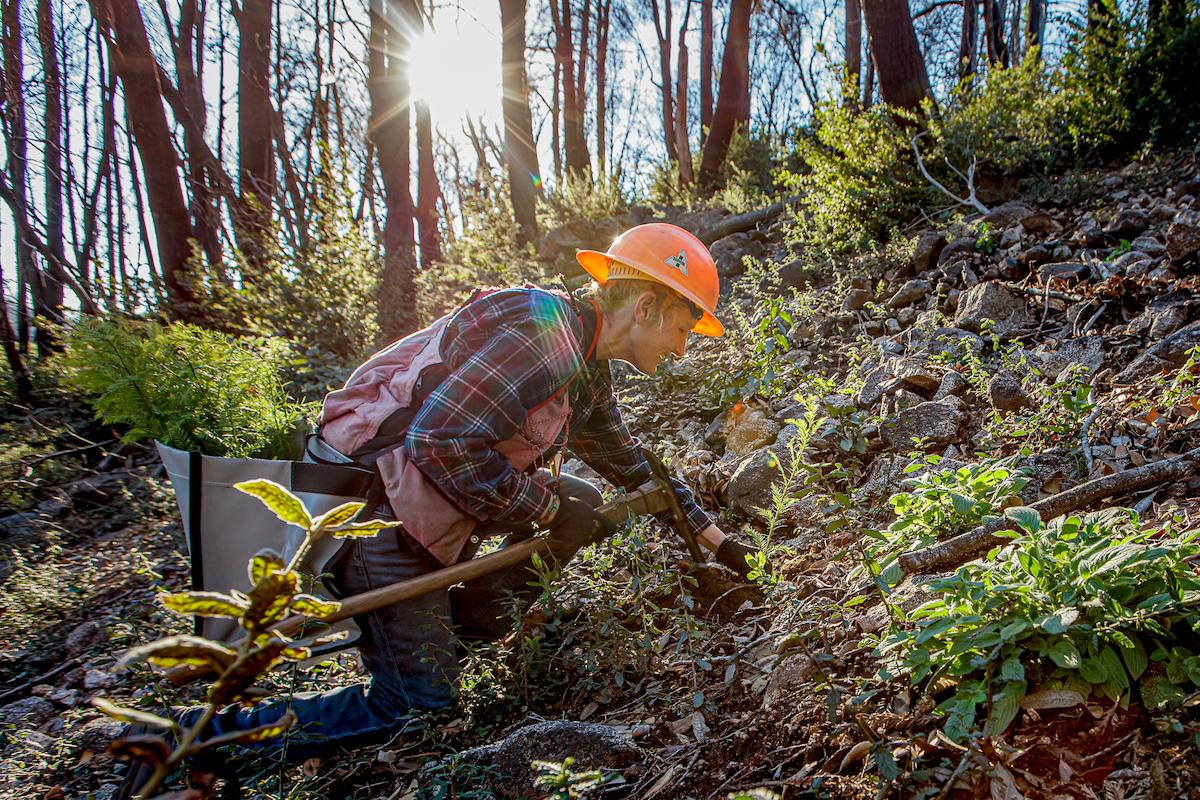
photo by Ian Bornath
Restoration forestry is a set of careful, site-specific techniques used to improve forest health, reduce risk, protect water, and support habitat. Some give selected redwoods more room to grow. Others restore streams, reduce hazards, or prepare the landscape for fire.
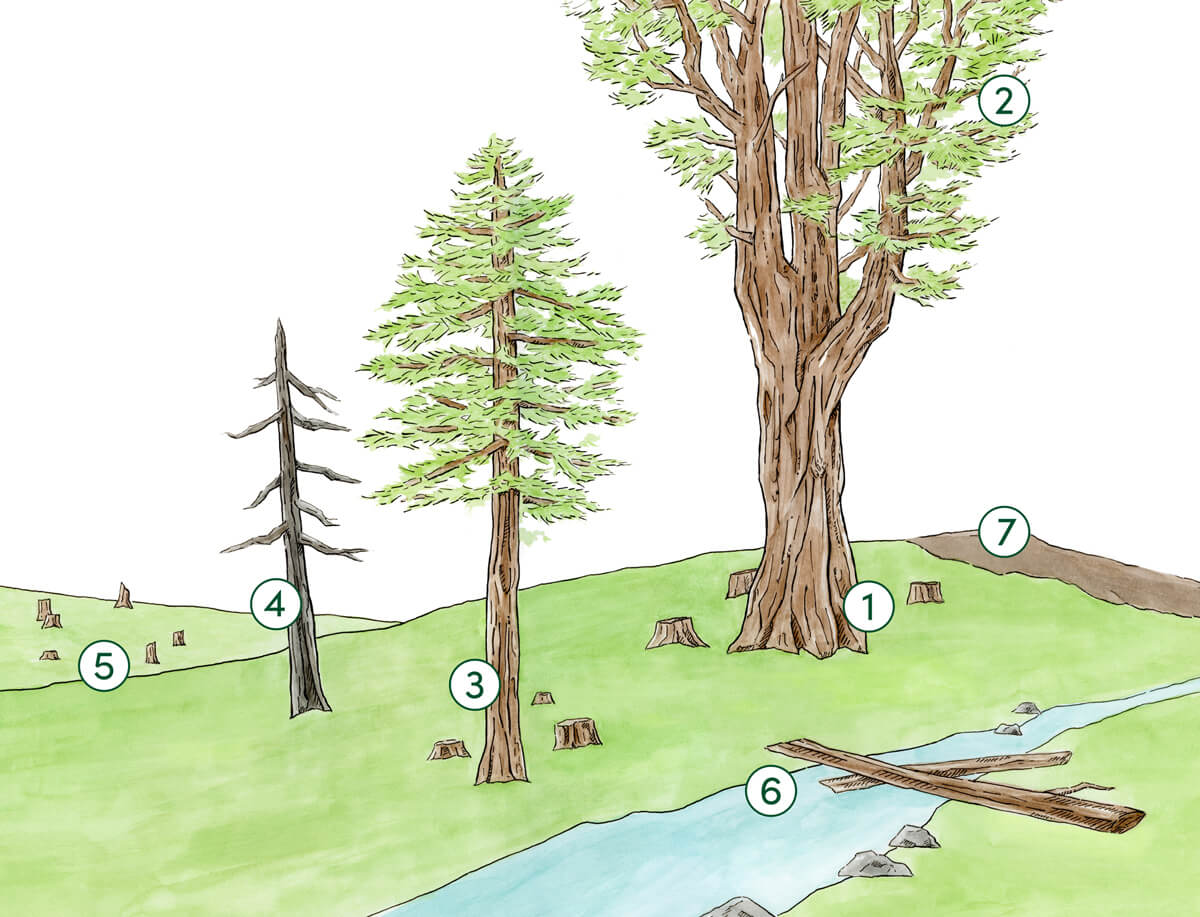
The techniques below show how that work happens on the ground.
Forestry Techniques
illustrations by Shirley Chambers
1. Old Growth Recruitment
A restoration forestry technique removing smaller trees too close to a larger tree (sometimes called an “old growth candidate tree”) to increase the tree's growth and resilience by reducing competition and fuel.
2. Crown Release
A restoration forestry technique removing smaller trees too close to a larger tree to increase the tree's growth and resilience by reducing competition and fuel.
3. Thinning
A restoration forestry technique removing smaller trees that are too dense to reduce density, competition, and fuel.
4. Hazard Tree Removal
A forestry technique removing dead or damaged trees in danger of falling on life, structures, or access routes.
5. Clear Cut Logging
A forestry technique, outlawed in the Santa Cruz Mountains region in the 1970s, logging all trees within an area at the same time often leaving only stumps and disturbed soil.
6. Large Woody Debris
A restoration forestry technique strategically placing trees or large limbs into the water to mimic natural conditions that provide crucial water habitat for fish, water quality, and natural floodplains to reduce flooding downstream.
7. Fuel Breaks
A restoration forestry technique removing fast burning plants and trees from strategic areas like ridgelines to slow the spread of fire and increase firefighting opportunities.
A Living Laboratory
At San Vicente Redwoods, restoration forestry is happening at a scale few places in the Santa Cruz Mountains can offer. Protected in 2011, the 8,532-acre property includes redwood forests, streams, grasslands, rare species habitat, and working forest areas. Managed in partnership with Peninsula Open Space Trust, Save the Redwoods League, and Land Trust Santa Cruz County, each conservation area has different needs for recovery and long-term care.
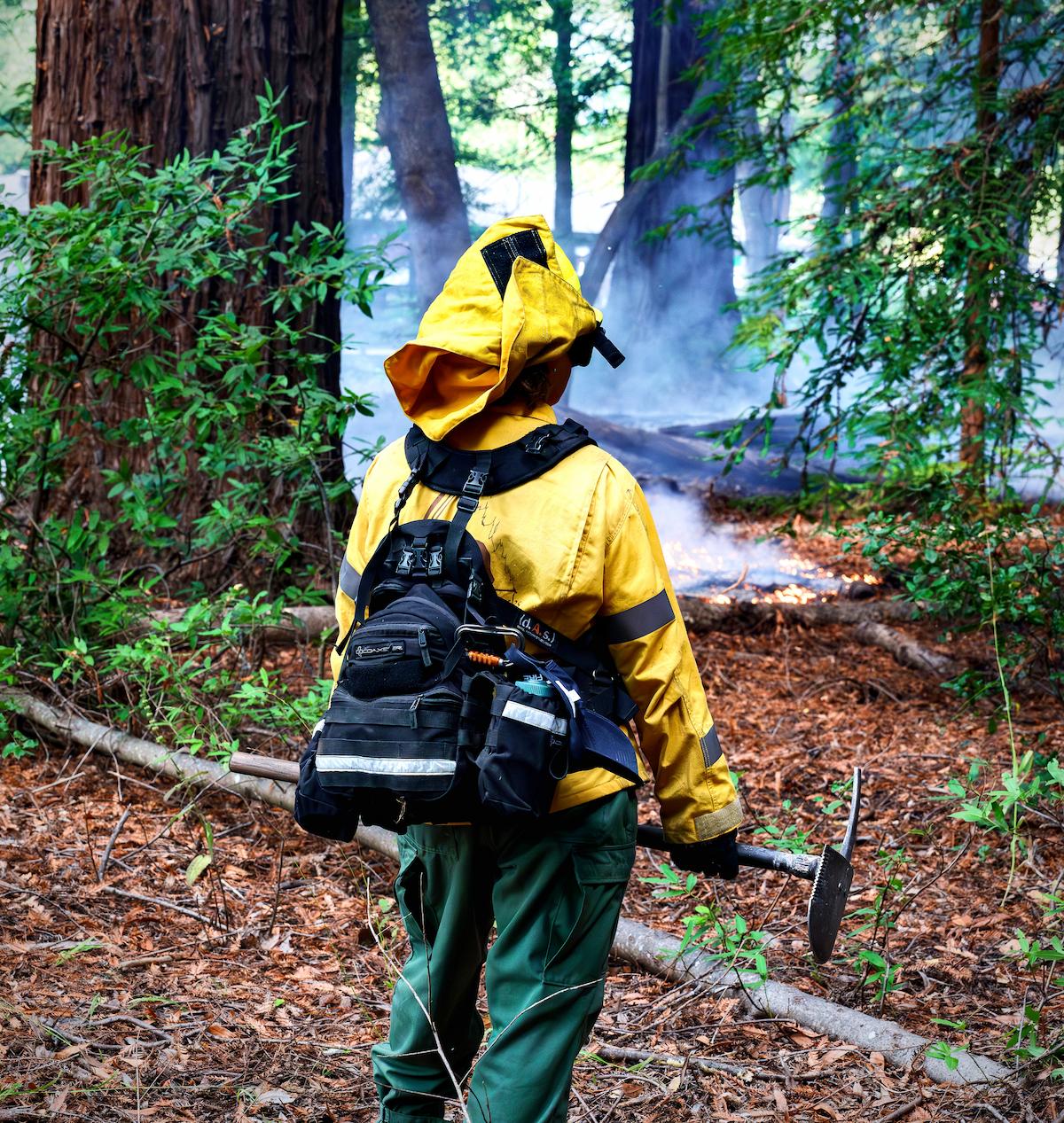
photo by Orenda Randuch
“Restoration at scale was always going to be tricky,” says Sempervirens Fund’s Executive Director Sara Barth. San Vicente Redwoods has become a living laboratory, where Sempervirens Fund and its partners are learning how to support forest health, prepare for wildfire, and balance careful human intervention with the needs of the land.
Across the property, that work is guided by the same underlying mechanisms that make old-growth forests ecologically rich. Strong trees need room to grow and crowded stands need relief from competition. Densely packed trees and built-up fuels can also intensify the consequences when fire returns to the landscape. Restoration at San Vicente Redwoods brings those needs together, helping Sempervirens Fund learn how to reset recovering redwood forests for greater complexity and resilience against drought, extreme heat, and fire.
Results for Redwoods
Restoration work at San Vicente Redwoods has already shown promising results. Before the CZU Fire, 30 acres were treated with prescribed and cultural burns, and more than 15 miles of shaded fuel breaks had been created. After the fire, treated areas appeared to weather the blaze better than nearby untreated areas, and shaded fuel breaks helped firefighters as they worked to protect nearby communities.
A photo of blackened tree trunks with healthy green canopies intact above was treated with a shaded fuel break prior to the CZU Fire and burned less severely. A photo of mostly standing dead trees with only a handful of trees bearing green regrowth and much more dense understory growth along the ground was not treated with a shaded fuel break prior to the CZU Fire and burned more severely. Photos taken in 2023 by Ian Bornarth.
Those results do not mean restoration can stop every fire or guarantee recovery. They do show that thoughtful preparation can make a difference. By reducing fuels, improving forest structure, restoring ecological processes, and helping trees better compete for limited resources, restoration forestry can give redwood forests a stronger chance to recover from past damage and endure future climate stress.
Redwood Recovery
In Real Time
You can see redwood recovery firsthand at San Vicente Redwoods, where public trails offer a glimpse of forests healing after fire and growing toward a more resilient future.
Thank you for helping protect and restore redwood forests today, while making it possible for the old-growth forests of tomorrow to take root.
More to Explore
- Read more about restoration forestry in Why Cut Redwoods by Audrea Lim and Bay Nature magazine
- Explore how Sempervirens is helping redwood forests return to nature through stewardship work across forests, streams, and wildlife habitat.
- Learn why preventing fragmentation is essential to protecting redwood forests before they are converted to more intensive uses.